Technology, creativity, and efficiency! Learn about the three trends in architecture and design aligned with the capabilities of enterprise automation.
Every year, the real estate market transforms according to new projects and customer demand. This phenomenon occurs not only by the innovations of this field, but by all that complement it, such as interior design and engineering. New tendencies in architecture arise with the entrance of materials, ecological furniture and technology.
The entry of automation technology into architectural projects is an irreversible path. In the coming years, intelligent systems will be present in smart homes and in the commercial environment, through corporate automation. It will be offering complete control of the systems, and be fully integrated with the functional and aesthetic part of the project.
But how can automation contribute to these aspects?
The corporate environment is being reconfigured for the concerns and demands of the professionals. The new organizational models, concern with quality of life at work and sustainability are values shared by companies. As a result, it is essential that work environment “inspires” the daily users.
Directly, enterprise automation features align new business building projects with these values. All this in a centralized way that is becoming the decoration and routines of professionals.
In this post, we will highlight 3 trends in architectural projects for commercial spaces prepared for integration with enterprise automation.
- Minimalism
- Biophilic Architecture
- Open Plan Design
MINIMALISM
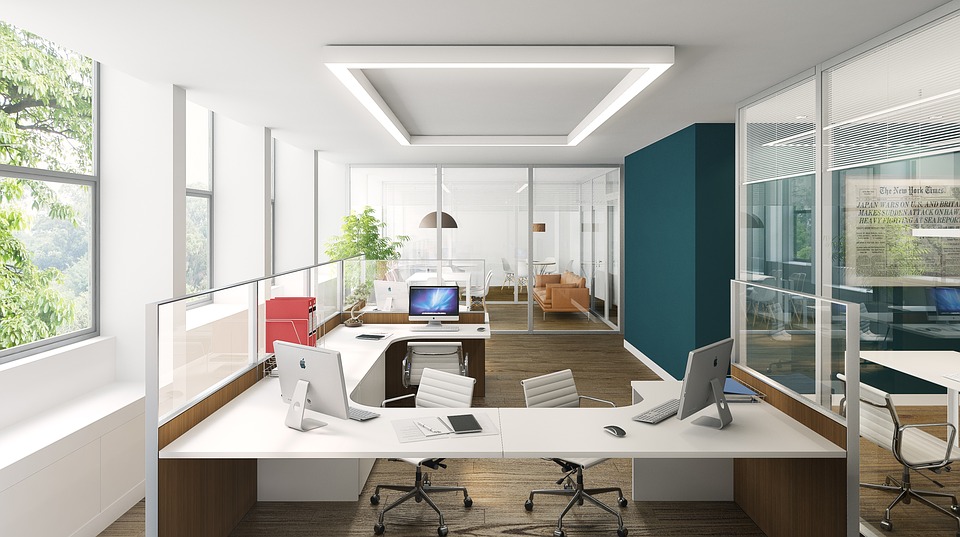
The minimalism in architecture is a movement that emerged in the 1980s as a response to the complexity of the hitherto dominant movements. Minimalist architects are critical of the excess of interventions present in their architectural designs. They value the integrity and individuality of each object.
Based on the “less is more” concept, developed by an architect Miers van der Rohe, the minimalist design requires rigorous spatial reflection. The reduction of elements – furniture, decoration, lighting – is not a rule to be followed, but a consequence of the project domain.
Although the architects of minimalism are quite rational in their choices, their work avoids being dull. That is, there is no minimalist pattern of decisions about materials that make the project of an architectural design repeatable. Each design is unique and not even the elements have to be sterile, as common-sense imagines.
In fact, the most important thing in minimalist architecture is that it shows the honesty of the professional and that, consequently, each object is understood by its user. At this point, it is interesting to highlight some features that have recently gained emphasis.
- Diffuse LED lighting, with maximum intensity to the environment;
- Contrasting elements, like walls of colors opposite the room;
- Clean furniture, thought individually in relation to the space (benches, tables).
- Functional coatings that highlight objects;
Although minimalism by itself does not consider technology an essential factor – which is noticeable in its creative freedom – automation is an interesting add-on to the project. The integration rationalizes equipment control, removing the excessive need for switches and remote controls.
Last but not least, enterprise automation provides sustainable options to the professional. Through automated shutters and dimerization, it is possible to work the dynamics between external and internal light. All physical space can be naturally lit and driven economically by automation devices.
BIOPHILIC ARCHITECTURE
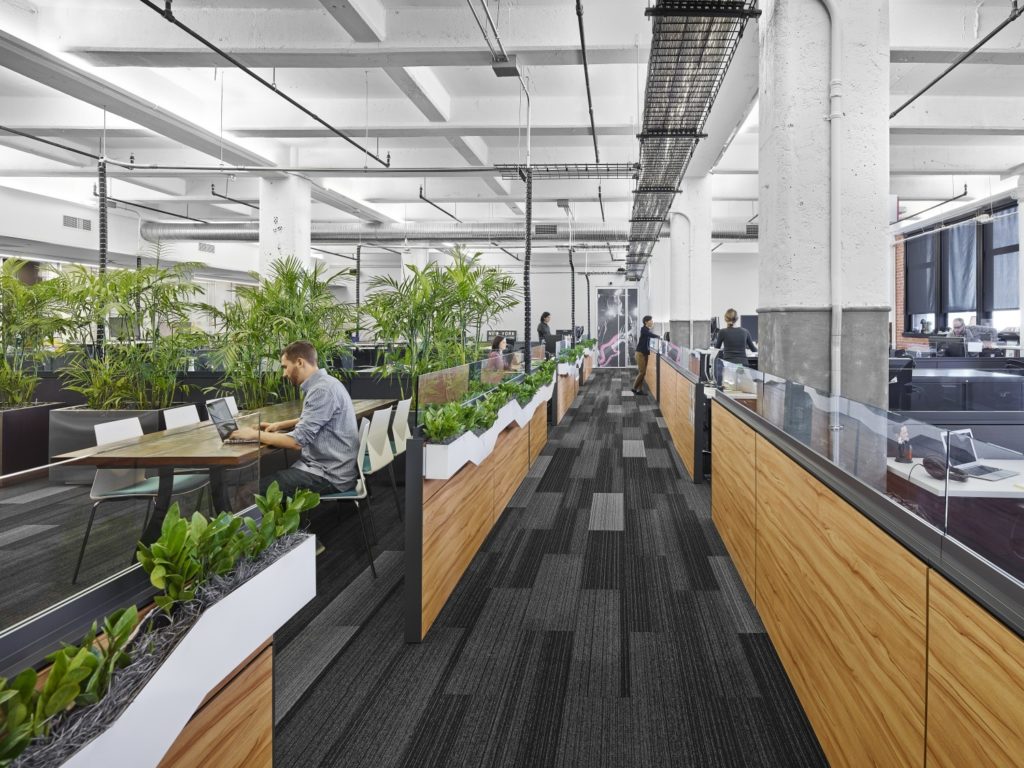
Sustainability is always a strong tendency for the automation market, although the term has origins in the 1980s. Overall, the interest focused energy efficiency and space humanization. As a result, the projects are integrated with the principle of sustainable architecture.
What does biophilic architecture mean then?
The biophilia hypothesis postulates that man has a natural affiliation with the environment. This association would have positive impacts on the psychological and social development for humanity. Several scholars from different fields of knowledge have conducted studies that demonstrate that environments increase safety and performance at work.
According to theorists, the urbanization process was conducted to sterilize human contact with nature. Modern architecture considered the risk of exposure to nature, such as diseases and animals. The problem is that this would have deepened the urban conflicts and problems.
Opposing this view, the biophilic architecture comes to rescue the connection between humans and nature.
In this process of recovery, professionals contribute to ecologically sustainable architectural projects or even simulate man-nature interaction.
- Use of natural walls and floors, as opposed to the use of concrete and metal;
- Decoration with plants in the internal environment, such as parklets.
- Green roofs;
- Fountains and walls of water.
For commercial architectural designs, the association with enterprise automation has many applications. By exploring the direct benefits, the solutions contribute to cost savings in HVAC systems and office lighting. All in an integrated way, through emitters, relay modules or radio frequency.
In complex projects, the use of enterprise automation still helps the structure not to waste rather than to economize. Robust solutions automate outdoor lighting and irrigation equipment, essential for economical garden maintenance.
OPEN PLAN DESIGN
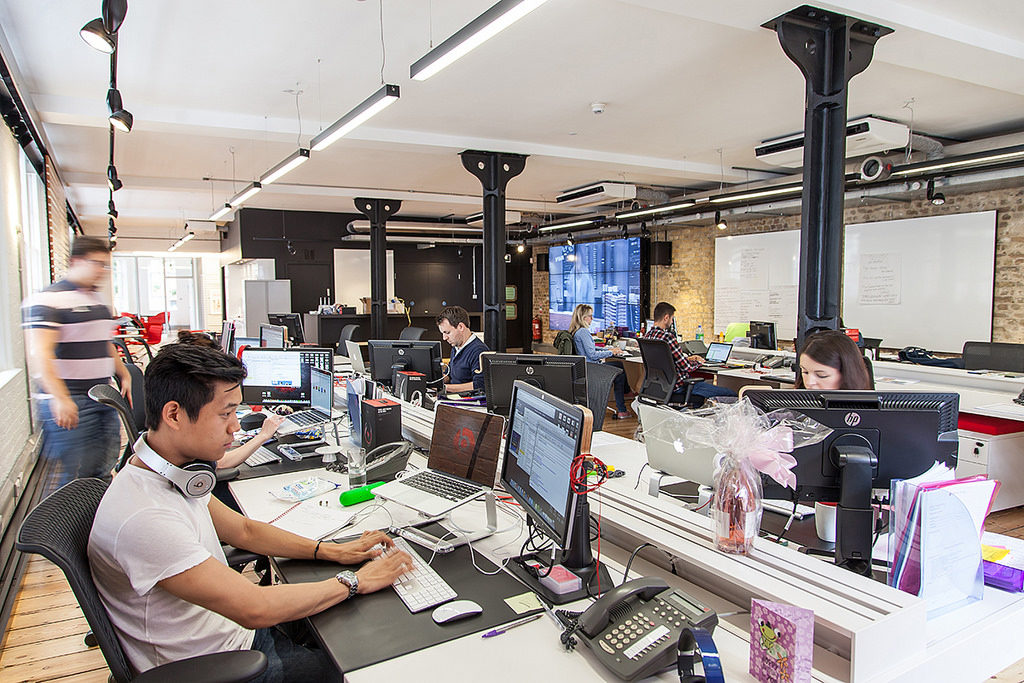
Characterized by the appreciation of open-size offices, open space has had different phases in the history of corporate architecture. In the 1950s, the concept was developed by the Germans Engelbert and Wolfgang Schnelle, who rethought the working environment for a collaborative space division format.
In contrast to the dominant individualism of corporate cubicles, the open plan proposed the use of workstations.
Rarely divided, the project extinguishes the wall division of the traditional office. It favors a furniture design that facilitates the interpersonal contact between teams.
The central objective is to incite the professional to get a “feeling of identity and belonging” in the work place, through the shared space project.
Still, the open plan concept values accessibility, facilitated communication, and hierarchical breakdown at work, less in aesthetic terms.
- Within an office, these values are noticeable in the structure of the place.
- Use of centralized bays, with access through the lateral corridors;
- Use of diffused lighting, evenly distributed for the comfort of sight;
- Absence of rooms of managers, who transit in the same space of the employees.
However, investing in this trend in automation is a technical challenge for professionals. Mainly due to the need to rationalize the consumption and functionality of the space for a multi-user audience and in general in large areas.
The energy cost of office automation – printers, scanners, and meeting room equipment – is especially high. Combined with the energy consumption of air conditioning, the expenses can be exorbitant at the end of the month.
To get around these problems, automated systems come as ideal solutions! In addition to the control of air conditioning and automated lighting, it enables the control of audio and video devices in meeting rooms. Projectors and televisions can be triggered by infrared technology and scheduled by mobile applications.
A MULTI-FUNCTION DESIGN FOR CORPORATE AUTOMATION
In addition to the main trends in architecture that we highlight, there are other innovative alternatives to architects and interior designers. Any professional work creative effort expressed in the efficiency of your projects, now can – and should! – be integrated with the features and advantages of enterprise automation.
The multi-function design, for example, is one of the most interesting news in the market. The projects of this strand integrate different environments – auditorium, leisure areas and workstations – for the different activities in a single open plan. Aligned for the millennial spirit, high technology and functionality mark the multi-function.
By this point, do you wonder how this project can be profitable for the automation integrator? There are hundreds of features to be integrated, such as multirooms and dimmable lighting, which bring maximum customization to the environment.
There are also trends in architecture that work as a concept of light filtering, reducing artificial lighting to favor external light. To create the impression of space expansion, the designers of this area use glass, clear textures and lighting focused on specific points of the project.
In addition to the high value of this architectural project, it is interesting to work with sensors and lights in dimerization for the economical use of luminaires. The features help in building various domotic scenarios, giving greater beauty and comfort to recurring office users.